Duration: 3'19''
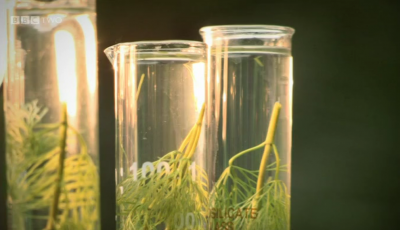
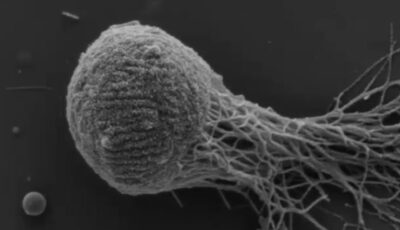
Seeds need the conditions to right in order to be able to germinate.
Licence: ERA Licence required
UK only Staff and students of licensed education establishments only Cannot be adapted
Add Notes
All life needs water | Bitesize Science
Osmosis is a special type of diffusion, involving water, where molecules move from a high to a low concentration.
Beneath the surface | Bitesize Science
Microscopes continue to develop over time, giving us access to increasingly incredible magnification.
Blood Vessels | Bitesize Science
A short guide on blood vessels in the body.
Dance of the chromosomes | Bitesize Science
Mitosis is a type of cell replication that is essential to the human body's ability to grow and repair.
Endothermic and exothermic reactions | Bitesize Science
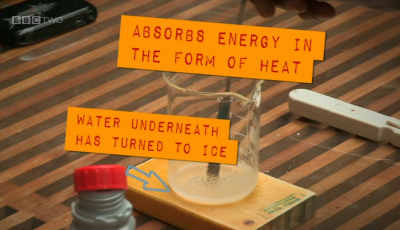
Endothermic reactions absorb heat, while exothermic reactions give off heat.
Enzyme power and food as fuel | Bitesize Science
Enzymes are biological catalysts which help us to get the energy we need from food to survive.
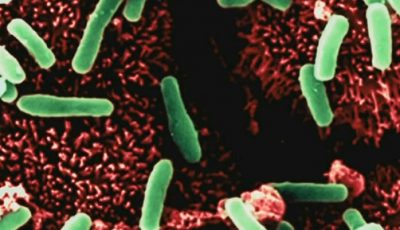
Growing bacteria | Bitesize Science
Bacteria reproduce by cloning themselves, and in the right conditions can reproduce very quickly.
Internal reflection | Bitesize Science
An examination of how light can be internally reflected, and how this is used for carrying information in fibre optic cables.
Newtons laws | Bitesize Science
Newton's laws of motion continue to underpin principles in modern day physics.
Photosynthisis | Bitesize Science
Photosynthesis is essential to life on this planet.
Solubility | Bitesize Science
Solubility is the measure of how much solute can dissolve in a solvent.
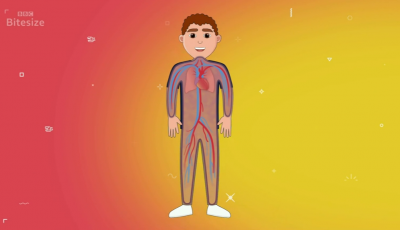
The circulatory system | Bitesize Science
A short guide on the circulatory system.
The feather and the hammer | Bitesize Science
Air resistance affects different objects and how they fall differently, just as Galileo suggested.
The force of friction | Bitesize Science
Any time one surface moves over another, there is a force of friction.
The oceans are changing | Bitesize Science
Scientists believe that our oceans are becoming more acidic due to the CO2 we are producing being absorbed by the oceans.
The power of invisibility | Bitesize Science
Light moves at different speeds through different objects, this can make objects appear in a different place to where they actua...
The race is on | Bitesize Science
The rate of a chemical reaction depends on the temperature, concentration, particle size and any catalysts present.
'Constant craver's'' and wanting food | What's The Right Diet For You? A Horizon Special
Some of the dieters use a grip-meter to test how much they want foods high in fat an...
'Emotional eater's'' and stress-eating | What's The Right Diet For You? A Horizon Special
Scientists give some of the dieter's a purposefully stressful driving test and then...
'Feaster's'' and gut hormones | What's The Right Diet For You? A Horizon Special
The scientists test the theory that some people lack a certain amount of GLP1, a gut hormone...
'Hungry'' genes and food cravings | What's The Right Diet For You? A Horizon Special
The "cravers" are strapped up with an eye tracker and results are compared with other di...
01: Creation | How to Build a Human
Scientists are now at the pivotal moment of being able to unlock the instructions hidden in the cells of humans.
02: Predictor | How to Build a Human
A look at the veracity of scientists' claims that they are on the verge of being able to predict our futures by analysing our genes and ...
03: The Secret of Sex | How to Build a Human
The precise mechanics of human sexual reproduction are revealed,using new technology to produce previously unseen images.
04: Living Forever | How to Build a Human
The solution to ageing may be in sight with the discovery that a vital gas is the chief culprit, while a drug claims to double life...
1: A Confusion of Names | Botany: A Blooming History
Timothy Walker reveals how the work of Carl Linnaeus, Phillip Miller and John Ray unlocked the mysteries of the plant ki...
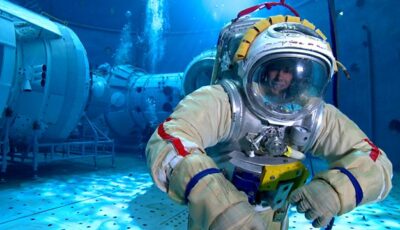
1: Apeman - Spaceman | Human Universe
Professor Brian Cox explores our place in the universe. He charts the story of humans from apes to the birth of civilisation to our asc...
1: Body and Soul | Andrew Marr on Darwin's Dangerous Idea
Andrew Marr explores how Darwin's theory of evolution by natural selection has taken on a life of its own far beyon...
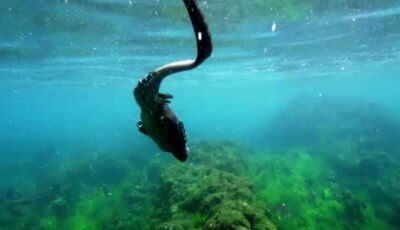
1: Cauldron of Life | Galapagos
Liz Bonnin joins a scientific team aboard the research vessel the Alucia on an expedition across the Galapagos Islands.
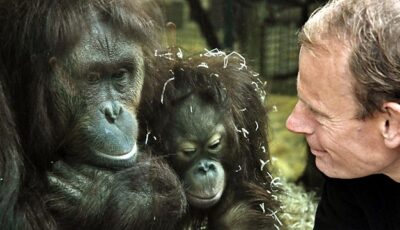
1: Challenges of Life | Life
David Attenborough examines how living long enough to breed is a monumental struggle, and how many animals and plants go to extremes to give the...
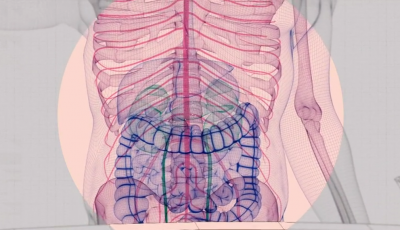
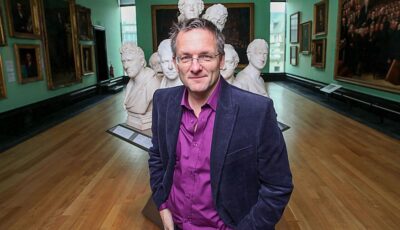
1: Creation | Inside the Human Body
Using state-of-the-art graphics, Michael Mosley shows the sequence of biological events that lead to human birth.
1: Island of Marvels | Madagascar
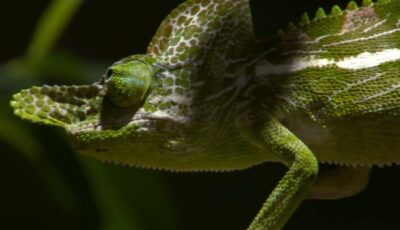
Series exploring Madagascar and its unique wildlife. David Attenborough reveals the most bizarre places and their inhabitants on this ecolo...
1: Life From Light | How to Grow a Planet
How plants have driven the greatest changes to the Earth. Prof Iain Stewart shows how they first harnessed light from the sun and c...
1: One Ocean | Blue Planet II
Wildlife documentary series presented by David Attenborough, revealing new worlds and animal behaviours throughout the planet's oceans.
1: Pain | Pain, Pus and Poison: The Search for Modern Medicines
Michael Mosley discovers what pain is and how we were able to control it with the discovery of morphine at th...
1: The Book of Life | The Gene Code
Adam Rutherford explores how the entire human genome was decoded, discovering that every human carries the entire story of life on earth ...
1: The First of Us | Human
The extraordinary story of how the human species, Homo sapiens, first emerged, where the discoveries of recent years are revolutionising the under...
Cookies help us run our services and give you a better experience. For the full details please read our Cookie Policy.