Synopsis
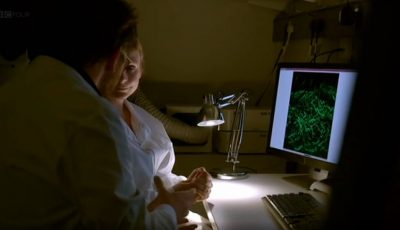
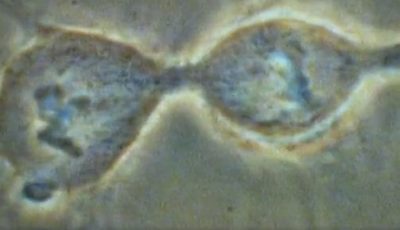
Spec references J247: 2.1a J250: 2.1a. Animated shorts to support students preparing for assessments in GCSE Additional Science.
- Programme: GCSE Bitesize Revision
- Episode: Additional Science 1
- Channel: BBC Two
- Broadcast year: 2010
-
Biology (J247): B2.1a
Combined Science (J250): B2.1a
Licence: ERA Licence required
UK only
Staff and students of licensed education establishments only
Cannot be adapted
Add Notes
More clips from GCSE Bitesize Revision
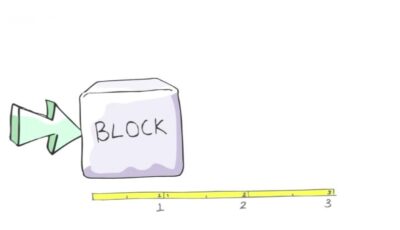
Acceleration | Additional Science 1
Spec references J249: P2.1h J250: P2.1h. Calculating acceleration and what the units mean - description and animation.
Acids, Bases and Salts | GCSE Bitesize Revision
Spec references J248: C3.3d, C3.3e, C3.3f, C3.3h, C4.2a J250: C3.3d, C3.3e, C3.3f, C3.3h, C3.1g. This video introduces acids ...
Acids, Bases and Salts 2 | GCSE Bitesize Revision
Spec references J248: C3.3d, C3.3e, C3.3f, C3.3h, C4.2a J250: C3.3d, C3.3e, C3.3f, C3.3h, C3.1g. This video introduces acid...
Atomic Structure - Revision | GCSE Bitesize Revision
Spec references J248: C1.2b, C1.2d, C1.2e J250: C1.2b, C1.2d, C1.2e. A fast-paced overview of the basics of atomic struc...
Cell Division | GCSE Bitesize Revision
Animated shorts to support students preparing for assessments in GCSE Additional Science.
Distance-time graphs | Additional Science 1
Spec references J249: P2.1b J250: P2.1b. Description and animation. Distance time graphs.
Enzymes and Digestion | GCSE Bitesize Revision
Animated shorts to support students preparing for assessments in GCSE Additional Science.
Homeostasis | GCSE Bitesize Revision
Spec references J247: B3.3a, B3.3b, B3.3c, B3.3d, B3.3e, B3.3g, B3.3j. Higher paper content for homeostasis. Structure of the kidney, ho...
How enzymes work | GCSE Bitesize Revision
Spec references J247: B1.2g J250: B1.2d. How enzymes break down substrates into products, lock and key model, denaturing of protein...
Introduction to Covalent Bonding | GCSE Bitesize Revision
This video introduces covalent bonding, focusing on electron sharing, the use of dot and cross diagrams, and exampl...
Ion formation and Ionic Bonding Revision | GCSE Bitesize Revision
Spec references J248: C2.2di, C2.2e, C2.2f J250: C2.2di, C2.2e, C2.2f. Ideal for topic revision, this video...
Kinetic energy | Additional Science 1
Spec references J249: P7.1e J250: P5.1e. Animation, description and worked example. Kinetic energy.
Kinetic Energy And Momentum | GCSE Bitesize Revision
Animated shorts to support students preparing for assessments in GCSE Additional Science.
Measuring the Rate of Reaction | GCSE Bitesize Revision
Spec references J248: C5.2a, C5.2c, C5.2d, C5.2e, C5.2f J250: C5.2a, C5.2c, C5.2d, C5.2e, C5.2f. This video provides ...
Mitosis, meiosis and reproduction | GCSE Bitesize Revision
Spec references J247: B2.1b, B5.1f, B5.1h J250: B2.1b, B5.1f. Different steps of mitosis, asexual reproduction, di...
Momentum | Additional Science 1
Spec references J249: P2.2k J250: P2.2k. Animation, description and worked example, p = m v. Description of force = rate of change of momentu...
Representing Motion | GCSE Bitesize Revision
Animated shorts to support students preparing for assessments in GCSE Additional Science.
Speed | Additional Science 1
Spec references J249: P2.1h J250: P2.1h. Calculating speed and units of speed - description and animation.
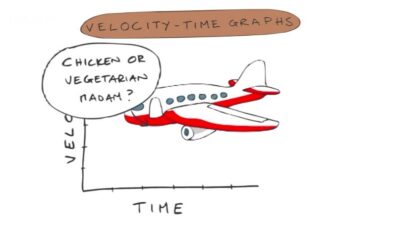
Velocity-time graphs | Additional Science 1
Spec references J249: P2.1e J250: P2.1e. Description and animation. Velocity time graphs.
Work done | Additional Science 1
Spec references J249: P2.2m, P7.1c, P7.1d J250: P2.2l, P5.1c, P5.1d. Animation, description and worked example. Work done = force × distance.
More resources about Cell Biology
2: The Chemistry of Life | The Cell
Adam Rutherford explores how scientists delved deeper into the world of the cell, seeking to reveal the magic ingredient that can bring c...
The establishment of Germ Theory | The Cell
This clip explores the revolutionary discovery that diseases are caused by microscopic organisms rather than spontaneous generati...
All life needs water | Bitesize Science
Osmosis is a special type of diffusion, involving water, where molecules move from a high to a low concentration.
The process of mitosis | Short Circuit
The process of mitosis, seen through a microscope, and then illustrated and explained with a computer simulation.
1: The Hidden Kingdom | The Cell
Adam Rutherford tells the story of the biological cell. He explores how centuries of scientific and religious dogma were overturned by the d...
Growing bacteria | Bitesize Science
Bacteria reproduce by cloning themselves, and in the right conditions can reproduce very quickly.
Mitosis, meiosis and reproduction | GCSE Bitesize Revision
Spec references J247: B2.1b, B5.1f, B5.1h J250: B2.1b, B5.1f. Different steps of mitosis, asexual reproduction, di...
When a sperm cell meets an egg cell | Inside the Human Body
Using state-of-the-art graphics, Michael Mosley shows what happens in the moments a sperm cell meets an egg cell.
01: Creation | How to Build a Human
Scientists are now at the pivotal moment of being able to unlock the instructions hidden in the cells of humans.
03: The Secret of Sex | How to Build a Human
The precise mechanics of human sexual reproduction are revealed,using new technology to produce previously unseen images.
3: The Spark of Life | The Cell
Adam Rutherford reveals how scientists are close to repeating what has happened only once in four billion years - the creation of a new life ...
Beneath the surface | Bitesize Science
Microscopes continue to develop over time, giving us access to increasingly incredible magnification.
Biology: 1: Cell Biology | A-Level Studies
First of series is a journey to the innermost depths of cells to explore the com plex yet beautiful processes which are the basis ...
Cell Cycle | AS Guru
Programme for AS level students, comprising archive clips and interviews.
Cell Division | GCSE Bitesize Revision
Animated shorts to support students preparing for assessments in GCSE Additional Science.
Cell division | i-Science
What is the role of mitosis and meiosis in the human body?
Cells | Curriculum Bites
Schools science programme where topics in the double science curriculum are broken down into small chunks.
Cells and their environment | AS Guru
Programme for AS level students, comprising archive clips and interviews.
Cells under a microscope | Science In Action
Spec references J247: B1.1a. Showing onion cells and cheek cells under a microscope.
Clones | i-Science
Clones | i-Science
Daphne and Barbara are so similar because they are clones, two people who have exactly the same genetic makeup. When their mother was pregnant, her fertil...