Synopsis
A fun, engaging and relevant programme, inspiring the viewer to consider the science within and how scientific process can be used to test ideas and develop theories, rather than just looking for a given answer to a known question. Aimed at Key Stage 4, but can also be used by teachers and pupils at Key Stage 3 and beyond Key Stage 4.
- Programme: I-Science
- Channel: BBC Two
- Broadcast year: 2009
- Science
Licence: ERA Licence required
UK only
Staff and students of licensed education establishments only
Cannot be adapted
Add Notes
More clips from I-Science
Cell division | i-Science
What is the role of mitosis and meiosis in the human body?
Clones | i-Science
Clones | i-Science
Daphne and Barbara are so similar because they are clones, two people who have exactly the same genetic makeup. When their mother was pregnant, her fertil...
Embryonic stem cells | i-Science
Stem cell research raises ethical issues, which makes some people uncomfortable about it, in spite of the potential benefits.
Gene therapy for cystic fibrosis | i-Science
Spec references J247: B6.3l J250: B6.3i. An example of a genetic disease, cystic fibrosis. Someone sharing their experiences of ...
Rate of photosynthesis | i-Science
Photosynthesis is the chemical reaction through which plants make glucose and oxygen. It is crucial to all life on Earth because it is the...
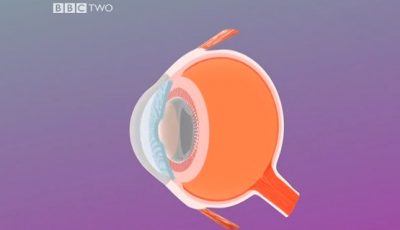
The eye | i-Science
The eye | i-Science
Specialist eye surgeons at the world famous Moorfields Eye Hospital in London, use some of the most technically advanced equipment to take a look inside ...
The human genome | i-Science
Whether genetic technology causes social harms is really up to us and how we choose to use it.
More resources about Science
The Global Village | Today And Tomorrow
The science programme for schools looks at the latest technology concerning telecommunications, including Prestel, a word processor a...
3: Coral Reefs | Blue Planet II
The wildlife documentary series narrated by David Attenborough reveals the ingenious ways life exists in the undersea cities of tropical reefs.
4: Big Blue | Blue Planet II
The wildlife documentary series narrated by David Attenborough explores a vast ocean desert where sperm whales must dive 1,000 metres just to feed.
Cattle feedyard | Meat: A Threat to Our Planet?
Liz Bonnin visits a cattle feedyard, a mass factory farm, that contains about 50,000 cows.
Greenhouse Gases | Climate Change: The Facts
A discussion of the devastating impact of burning fossil fuels.
How hurricanes are formed by Earth's rotation | Learning Zone
Physicist Helen Czerski explains that hurricanes happen because the earth is rotating. She shows how, because t...
Orbit: Earth's Extraordinary Journey | Learning Zone
Kate Humble and Dr Helen Czerski follow the Earth's voyage around the sun for one complete orbit, to witness the astonis...
1: One Ocean | Blue Planet II
Wildlife documentary series presented by David Attenborough, revealing new worlds and animal behaviours throughout the planet's oceans.
6: Coasts | Blue Planet II
The wildlife series narrated by David Attenborough explores the planet's coasts. They are the most changeable of the ocean worlds, but they offer ...
Biodiversity | Our World
A team of botanists from Kew discuss the importance of protecting biodiversity.
Climate injustice | Royal Institution Christmas Lectures
The people and areas that are being most affected by climate change are often those which contribute the least.
Episode 2 | The Great American Buffalo
By the late 1880s, the buffalo teeter on the brink of extinction, but an unlikely collection of Americans have started a few private h...
Orbit: Earth's Extraordinary Journey
Kate Humble and Dr Helen Czerski follow the Earth's voyage around the sun for one complete orbit, travelling first from July to the Dece...
Piling on pounds | Life
Brown bears take advantage of a salmon run to fatten up for the winter.
Plastic in the sea | My Life
Isabel searches for plastic in the ocean around Bali, and explains that not all plastics in the sea are visible.
Return of the Emperors | Dynasties
Emperor penguins return to the newly-frozen sea ice to breed.
Synchronised hunting | The Hunt
Working in perfect unison the dolphins charge to the shore, creating a bow wave that carries their prey onto the muddy banks where the dolphi...
The pollination process | The Private Life of Plants
David Attenborough describes the process of pollination and how this helps plants reproduce.
The smallest fox with the biggest ears! | Super Cute Animals (video)
The fennec's ears help it to survive in the heat of the desert dunes.
1: A Cat's Eye View | Cat Watch 2014: The New Horizon Experiment
Liz Bonnin and a team of experts conduct a groundbreaking scientific study of cats, revealing how cats exper...